



FLIP THE SCRIPT on IBS-C With a Different Mechanism of Action in a Different Class of Therapy1,2

IBSRELA: The First and Only Retainagogue for IBS-C1-4
IBSRELA reduces absorption of dietary sodium, causing retention of water content in the intestinal lumen2
 First and only NHE3* inhibitor for IBS-C1,2
Not a secretagogue or GC-C agonist1,2
Acts locally in the gut and is minimally absorbed1
First and only NHE3* inhibitor for IBS-C1,2
Not a secretagogue or GC-C agonist1,2
Acts locally in the gut and is minimally absorbed1
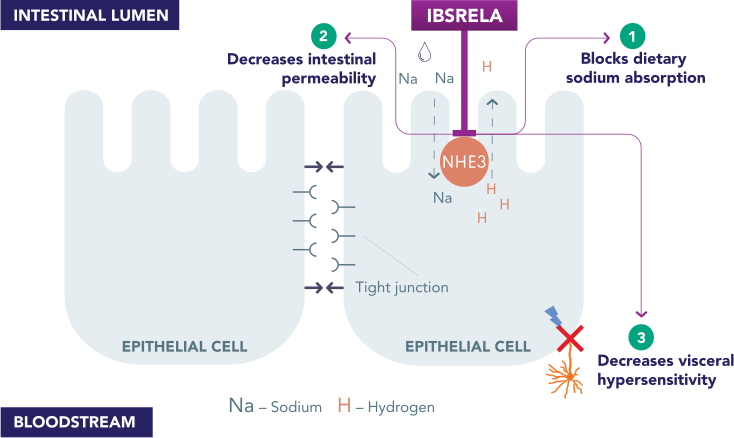
By inhibiting NHE3, IBSRELA addresses abdominal pain and constipation of IBS-C in three ways:

By reducing dietary sodium absorption, luminal water content is retained, accelerating intestinal transit time and resulting in softer stool consistency.

By decreasing intestinal permeability, IBSRELA reduces abdominal pain.1,5

By decreasing visceral hypersensitivity, IBSRELA reduces abdominal pain.1,5
‡Based on animal models; and the relevance to humans is not known.1,5
- *NHE3, the sodium/hydrogen exchanger isoform 3, is expressed on the apical surface of the small intestine and colon and is primarily responsible for the absorption of dietary sodium.1
- †In clinical studies of healthy volunteers, IBSRELA has been shown to block the absorption of up to 3g of dietary salt with no impact on serum sodium levels.6,7
- GC-C=guanylate cyclase-C.
Two Classes of Prescription Treatment for IBS-C2
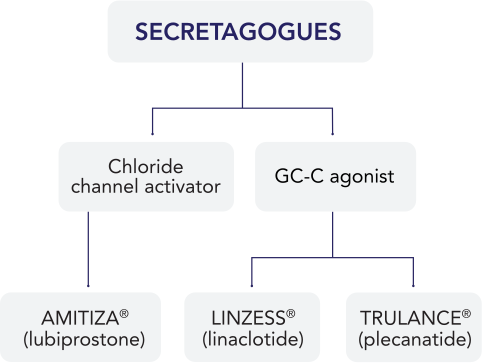
Water moves into the intestinal lumen because there is secretion of chloride and bicarbonate ions.
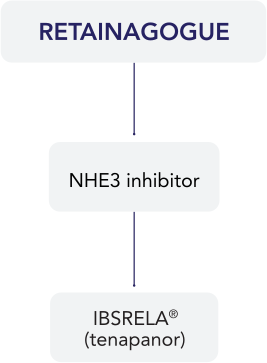
Water stays in the intestinal lumen because there is decreased dietary sodium absorption.
-
Adapted from: Brenner DM. Mechanism of action considerations in the management of IBS-C. Gastroenterol Hepatol (N Y). 2023;19(12):749-756.
All trademarks, logos, and brand names are the property of their respective owners.
Discover the different MOA and read an expert-authored article about IBS-C treatment options
View publication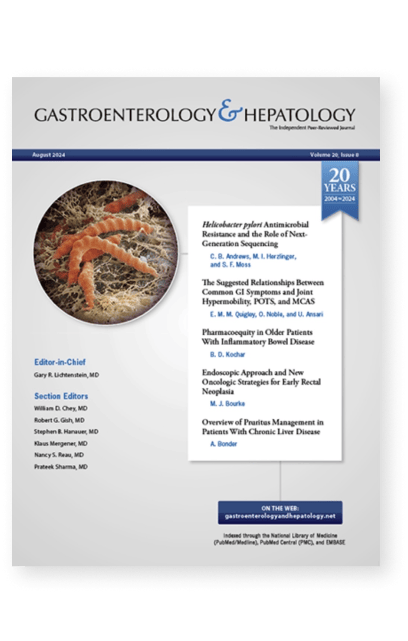


Peer Perspectives
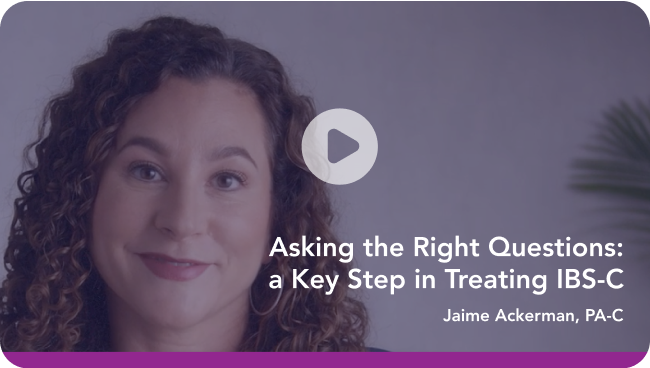
“With more treatment options available, if a patient is still having symptoms, I want us to consider trying a medication with a different mechanism that is part of a different class because my goal is to help my patients get as much symptom relief as possible.”
—Jaime Ackerman, PA-C
Compensated advisor to Ardelyx

References:
1. IBSRELA [prescribing information]. Waltham, MA: Ardelyx, Inc.; 2025. 2. Brenner DM. Mechanism of action considerations in the management of IBS-C. Gastroenterol Hepatol (N Y). 2023;19(12):749-756. 3. Herekar A, Shimoga D, Jehangir A, et al. Tenapanor in the treatment of irritable bowel syndrome with constipation: discovery, efficacy, and role in management. Clin Exp Gastroenterol. 2023;16:79-85. 4. Barbara G, Barbaro MR, Fuschi D, et al. Inflammatory and microbiota-related regulation of the intestinal epithelial barrier. Front Nutr. 2021;8:718356. 5. King AJ, Chang L, Qian L, et al. NHE3 inhibitor tenapanor maintains intestinal barrier function, decreases visceral hypersensitivity, and attenuates TRPV1 signaling in colonic surgery neurons. Am J Physiol Gastrointest Liver Physiol. 2024;326(5):G543-G554. 6. Spencer AG, Labonte ED, Rosenbaum DP, et al. Intestinal inhibition of the Na+/H+ exchanger 3 prevents cardiorenal damage in rats and inhibits Na+ uptake in humans. Sci Transl Med. 2014;6(227):227ra36. 7. Rosenbaum DP, Yan A, Jacobs JW. Pharmacodynamics, safety, and tolerability of the NHE3 inhibitor tenapanor: two trials in healthy volunteers. Clin Drug Investig. 2018;38(4):341-351.
INDICATION
IBSRELA (tenapanor) is indicated for the treatment of Irritable Bowel Syndrome with Constipation (IBS-C) in adults.
IMPORTANT SAFETY INFORMATION
WARNING: RISK OF SERIOUS DEHYDRATION IN PEDIATRIC PATIENTS
IBSRELA is contraindicated in patients less than 6 years of age; in nonclinical studies in young juvenile rats administration of tenapanor caused deaths presumed to be due to dehydration. Avoid use of IBSRELA in patients 6 years to less than 12 years of age. The safety and effectiveness of IBSRELA have not been established in patients less than 18 years of age.
CONTRAINDICATIONS
- IBSRELA is contraindicated in patients less than 6 years of age due to the risk of serious dehydration.
- IBSRELA is contraindicated in patients with known or suspected mechanical gastrointestinal obstruction.
WARNINGS AND PRECAUTIONS
Risk of Serious Dehydration in Pediatric Patients
- IBSRELA is contraindicated in patients below 6 years of age. The safety and effectiveness of IBSRELA in patients less than 18 years of age have not been established. In young juvenile rats (less than 1 week old; approximate human age equivalent of less than 2 years of age), decreased body weight and deaths occurred, presumed to be due to dehydration, following oral administration of tenapanor. There are no data available in older juvenile rats (human age equivalent 2 years to less than 12 years).
- Avoid the use of IBSRELA in patients 6 years to less than 12 years of age. Although there are no data in older juvenile rats, given the deaths in younger rats and the lack of clinical safety and efficacy data in pediatric patients, avoid the use of IBSRELA in patients 6 years to less than 12 years of age.
Diarrhea
Diarrhea was the most common adverse reaction in two randomized, double-blind, placebo-controlled trials of IBS-C. Severe diarrhea was reported in 2.5% of IBSRELA-treated patients. If severe diarrhea occurs, suspend dosing and rehydrate patient.
MOST COMMON ADVERSE REACTIONS
The most common adverse reactions in IBSRELA-treated patients (incidence ≥2% and greater than placebo) were: diarrhea (16% vs 4% placebo), abdominal distension (3% vs <1%), flatulence (3% vs 1%) and dizziness (2% vs <1%).

